Late on a damp Friday evening at a local sporting activities ground in Gosnells, play picked up a really different factor. A male in his 50s had actually fallen down near the sideline. 2 people ran over. One checked for an action and breathing, the other ordered a phone and shouted for the AED. Within a minute, upper body compressions had actually begun. By the time paramedics showed up, the male had actually gotten two shocks from the defibrillator and continual, solid compressions. He survived.
Encounters like this are not unusual. A lot of out‑of‑hospital cardiac arrests take place in everyday places, with family members, associates, or colleagues nearby. In Australia, survival after out‑of‑hospital heart attack is generally in the solitary figures to low teens, however when an onlooker begins CPR promptly and an AED is made use of within mins, survival can multiply severalfold. That is why first aid training in Gosnells is not simply a certificate, it is a neighborhood asset.
Why a couple of minutes make the difference
Cardiac arrest is an electrical problem. The heart suddenly quits pumping efficiently, usually due to the fact that the rhythm ends up being disorderly. Without blood circulation, mind cells start to endure within minutes. Every minute without CPR and defibrillation reduces the chance of survival by roughly 7 to 10 percent. Those are not frighten methods, they are the numbers numerous rescue solutions and the Australian Resuscitation Council base their support on.
Here is the enthusiastic component. Breast compressions reduce the clock. Excellent compressions flow a portion of normal blood circulation, which acquires time for the defibrillator and the paramedics. An AED can reset the heart if the rhythm is shockable, and that opportunity is highest possible early. So the objective is simple: acknowledge arrest quick, call 000, start compressions, and use an AED as soon as it appears.
Cardiac arrest is not a heart attack
The terms obtain muddled in conversation. A heart attack is a blood circulation issue in the heart muscle, typically a blocked artery. The person is awake, typically suffering, often nauseated or sweaty. Heart attack is an unexpected failing of the heart to pump. The person collapses, stops breathing normally, and ends up being unresponsive.
Because cardiovascular disease can tip into arrest, think about them as two ends of a range. If a person in Gosnells experiences chest pain or stress that lasts more than a few minutes, call 000 early. If that same individual suddenly quits reacting and is not breathing usually, change right into apprehension setting without delay.
The apparent signs of cardiac arrest
- The person is less competent despite a firm shoulder squeeze and loud voice. There is no normal breathing. You could see gasping or grunting in the very first minutes. That is agonal breathing, not typical breathing. You can not really feel normal indicators of life. If you are trained, check for a carotid pulse for no more than 10 seconds, but do not postpone compressions if unsure. The collapse is sudden, in some cases come before by a short seizure‑like shake.
If your mind is split in between possibly and of course, act as if it is heart attack. Starting CPR on a person that still has a pulse is uncommon if you check for responsiveness and breathing appropriately, and the risk of small bruising is far surpassed by the cost of waiting when the heart has currently stopped.
The CPR series that operates in genuine life
- Call 000, put the phone on audio speaker, and send out a person for an AED. Start breast compressions in the facility of the upper body, 100 to 120 per minute, deepness regarding 5 to 6 cm in grownups. Allow the breast totally rise each time. After 30 compressions, offer two breaths if educated and geared up, with a head tilt and chin lift. If you can not or prefer not to offer breaths, do continual compressions. Apply the AED as soon as it shows up. Transform it on, adhere to the motivates, keep hands off during evaluation, provide a shock if suggested, and restart compressions immediately. Rotate compressors every 2 mins to prevent exhaustion. Keep going until the individual wakes, an AED says no further analysis is required and the individual is responsive, or paramedics take over.
Those steps align with Australian Resuscitation Council advice that underpins CPR courses in Gosnells. The rhythm may not really feel smooth at first. That is regular. Excellent CPR has to do with consistency, not style. Suspend loud, maintain your shoulders over your hands, and use your body weight as opposed to simply your arms.
Using an AED with self-confidence in Gosnells
Automated external defibrillators stay in even more locations around Gosnells than a lot of locals understand. Recreation center, gyms, institutions, clubs, and lots of workplaces maintain them in noticeable cabinets. Some are keypad secured to avoid theft, with the code presented on the closet itself or supplied by 000 when you call. St John WA preserves a public defibrillator map for Western Australia, which deserves a look during daytime as opposed to in the panic of an emergency.
An AED is designed for laypeople. Open the cover or press the power button. The device talks in calmness, step‑by‑step sound. Reveal the chest, peel off the pads, and stick them where the diagram reveals, usually one listed below the appropriate collarbone and the other on the left side of the chest below the armpit. If the chest is very perspiring, wipe it swiftly. If it is really unshaven, make use of the provided razor to clear pad‑sized areas. If there is a pacemaker bulge, place the pad a few centimeters away from the device.
During analysis, maintain hands off. If the tool recommends a shock, make certain no one is touching the person. State loudly, stand clear, and push the flashing switch when prompted. Then jump right back into compressions. Modern AEDs will reanalyse every 2 mins or so.
Do not be shy regarding making use of an AED. You can not make the situation even worse by applying it. If the heart is not in a shockable rhythm, the AED will not deliver a shock. Defibrillators are incredibly safe when used as directed.
Adjusting method for youngsters and infants
The concepts coincide, the hands change. For a kid from concerning one year to adolescence, compress regarding one 3rd the chest deepness, about 5 centimeters, utilizing a couple of hands depending upon the dimension of the kid and the rescuer. For a baby under one year, compress about one third the breast depth, roughly 4 centimeters, with two fingers on the breastbone simply below the nipple line, or the two‑thumb surrounding method if there are 2 rescuers.
Breaths count more in kids than adults, due to the fact that respiratory problems are a more usual root cause of pediatric arrest. If you can aerate with a barrier device, use the 30 compressions to 2 breaths ratio for single rescuers or 15 to 2 if there are 2 experienced rescuers. If you are alone, execute concerning two mins of CPR prior to delegating call 000, unless you can call on speaker.
Most AED pads are designed for grownups, but lots of AEDs have pediatric pads or a kid mode. If pediatric pads are available, utilize them. Otherwise, apply grown-up pads without delay, making sure they do not touch each various other. Conserving time issues greater than excellent pad size.
Drowning, trauma, and various other special situations
Not all apprehensions begin the exact same. In sinking, oxygen deprivation is the key issue. As soon as the individual is out of the water and on a company surface, start with 5 preliminary rescue breaths if you are educated, then continue with compressions and breaths. Eliminate wet garments just if it is impeding pad attachment, and completely dry swiftly where the pads will certainly go.
In significant injury with severe bleeding, control life‑threatening hemorrhage as early as possible. If you see a devastating bleed, use straight stress or a tourniquet prior to or together with beginning compressions, because uncontrolled blood loss will beat your efforts.
In maternity, position a towel or folded up coat under the lady's best hip to tilt her a little left. This lowers pressure from the womb on the major vein that returns blood to the heart. If an AED is readily available, utilize it normally. Continue CPR till paramedics get here. In unusual situations, progressed groups may perform a resuscitative distribution on scene. Your duty is to maintain the blood moving.
With believed opioid overdose, you may see slow or lacking breathing and pinpoint students. If the individual is unresponsive and not breathing generally, begin CPR. If naloxone is readily available and you are trained to utilize it, provide it quickly while compressions proceed. Even when opioids are the cause, upper body compressions and rescue breathing are still critical.
Pacemakers, implanted defibrillators, and breast enhancement do not alter whether you attempt resuscitation. Area pads near, out top of, devices or medical marks when possible.
Teamwork on a footpath or factory floor
Real emergencies are noisy, crowded, and messy. Excellent groups create fast when a person takes possession. Someone collaborates, appoints, and watches the clock. An additional compresses. A 3rd handles the air passage and breaths. A fourth operates the AED. If there are more hands, they clear space, compete the defib, flag down the ambulance, or revolve in for compressions.
Fatigue ruins compressions. After concerning 2 minutes, even solid rescuers start to shed deepness and rate. Change compressors at every AED analysis or at clear time points. Use a metronome on a phone set to 110 beats per minute if rhythm wanders. I have seen this simple trick raise the top quality of CPR immediately.
Speak simply. Words like stop, shock, and swap need to be heard and understood. Indicate individuals when you designate work. Prevent inquiries like can someone get the AED. Use straight instructions like you in the blue t shirt, AED from function, code is 0000, run.
Common errors and exactly how to stay clear of them
The first is hesitating as well long. If you can not discover normal breathing, start compressions. The second is superficial deepness. Aim for 5 to 6 centimeters on adults. That can feel deep. Trust the numbers. The 3rd is leaning on the breast. Complete recoil in between compressions issues due to the fact that it allows the heart refill. The 4th is stopping compressions for as well long. Every time out lowers blood flow. Also throughout AED pad placement, try to keep compressions going till the device advises you to stand clear.
There is likewise the human tendency to gather in. Develop room. Ask non‑essential people to step back. Setting yourself with straight arms and your shoulders over your hands. If you are smaller sized than the individual, kneel near to the upper body to let your weight work for you.
Finally, do not neglect safety and security. Try to find risks like live electrical energy, website traffic, or a gas leak. In Gosnells, roadside events are common sufficient that parking autos to shield the scene and making use of threat lights can protect against an additional disaster.
Legal defense for onlookers in Western Australia
Many individuals fret about doing the wrong thing. Western Australia has Do-gooder protections that shield individuals who make help in an emergency situation, provided they act in excellent faith and without gross carelessness. You are not anticipated to do like a paramedic. You are anticipated to try to help. If you call 000 and adhere to the driver's support, you are acting reasonably.
CPR, using an AED, controlling bleeding, and Visit this page putting somebody in the recovery position loss directly within the range helpful that Do-gooder legislations contemplate. In training, we discuss these securities since they free your hands and mind when secs count.
After the alarms: caring for the rescuer
Finishing a resuscitation attempt leaves a mark. You may really feel shaky for hours, flat for days, or irritable at strange times. These are regular responses to a high‑stakes event. Debrief with coworkers or family members. If your work environment has a staff member help program, utilize it. St John WA and other services can point you towards peer assistance if you need it.
If you utilized an AED from a public cupboard in Gosnells, return it promptly or allow the custodian know so they can change pads and batteries. If the event happened at the workplace, document it accurately. Training companies commonly welcome feedback or concerns after real‑world events, and a brief follow‑up can turn a stressful memory into learning.
What high‑quality CPR seems like when you are doing it right
Compressing at the proper depth and rate has a distinctive rhythm. You ought to really feel the sternum give under your hands, after that return totally. Your arm joints stay locked, your top body moves as a device, and your knees take the strain. If you find your hands creeping up or down the breast, reset to the facility of the lower half of the breast bone. If sweat or tiredness compromises your position, swap out.
Breaths need to simply raise the upper body, not inflate it like a balloon. Over‑ventilation can press air into the tummy and cause regurgitation. A pocket mask with a one‑way shutoff boosts safety and seal. If you do not have one, compressions‑only CPR still aids tremendously in adults. The proof base for hands‑only CPR as a bridge to defibrillation is solid, specifically in the first minutes.
Bringing AED access closer to where individuals collapse
AEDs save lives when they are close. In Gosnells, it makes good sense for community sports clubs, shopping areas, and offices with large foot web traffic to maintain a gadget on site. Mount them in visible locations, signpost plainly, and examine monthly. If your group has a defib sitting in a locked office, that is functionally the like not having one after hours. Think about a cupboard with an audible alarm system, brilliant signs, and a basic accessibility process so charter member and onlookers can act quickly.
A little functional detail matters. Stick spare pad collections and a towel in the closet. Mark the place in a defibrillator registry. Run a quick drill two times a year so people understand which vital cupboard to open up and which door to prop throughout an emergency. These little actions reduce the time to very first shock.
Training that transforms objective into skill
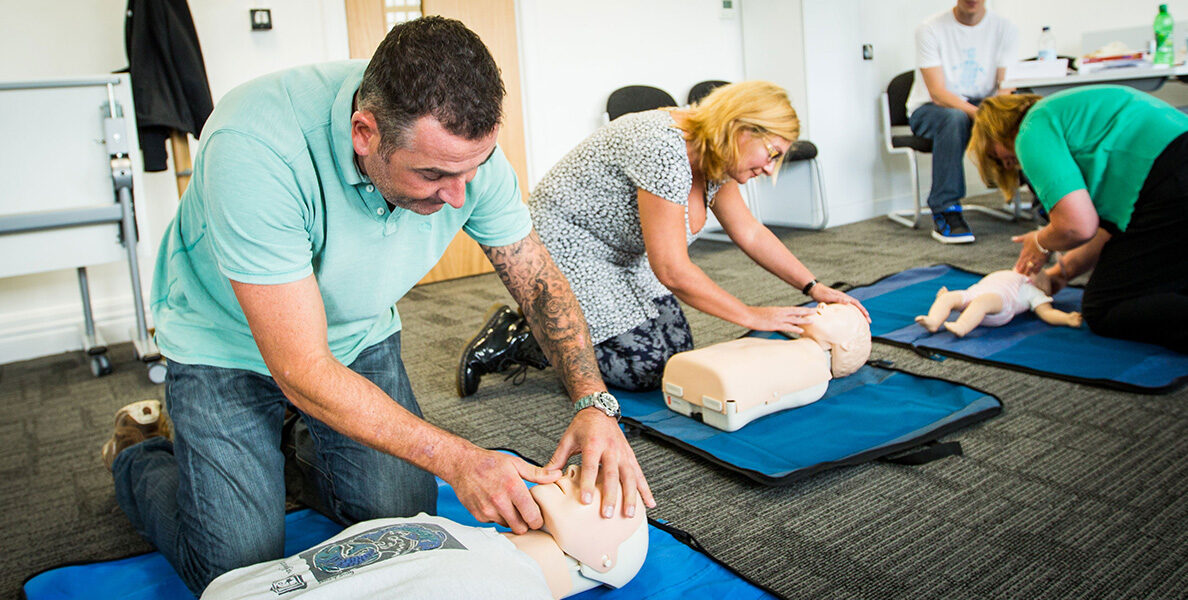
Courses are where you transform theory right into muscular tissue memory. In a gosnells first aid course you can exercise compressions to a metronome, really feel the proper depth on a comments mannequin, and repair the unpleasant little bits that never appear in glossy diagrams. First aid training Gosnells carriers instruct the DRSABCD strategy, how to take care of the airway, exactly how to make use of an AED cleanly, and exactly how to remain secure while doing it.
If you work with children, a first aid and CPR course Gosnells that covers pediatric variants will certainly expand your self-confidence into the play area and the parking area. For teams in building, manufacturing, or hospitality, gosnells first aid training often packages hemorrhaging control, burns, and crush injury monitoring together with CPR so the abilities match the dangers on site.
Providers like First Aid Pro Gosnells and other regional organisations run sessions during the week and on weekends. A cpr course gosnells normally runs for a few hours, while a full first aid course in Gosnells can take a day, relying on the unit of competency. Many offer combined knowing, with online concept prior to a face‑to‑face useful. If you require a first aid certificate Gosnells for job compliance, check that the course satisfies nationwide standards Get more info which the certificate states the appropriate devices, such as HLTAID009 for CPR and HLTAID011 for Offer Very First Aid.
For individuals that completed training last year, a cpr correspondence course gosnells is worth reserving. The Australian Resuscitation Council advises rejuvenating CPR skills at least every 12 months because strategy rots without method. First aid and CPR courses Gosnells usually supply scenario‑based refreshers that mimic the sound and pressure of genuine phone calls as opposed to simply duplicating textbook steps.
Choosing the right course for your purpose
Match the web content to the context. If your goal is home preparedness and you want to focus on apprehension acknowledgment, compressions, and AED use, a targeted cpr training gosnells session may suffice. If you manage a team at a storehouse, consider first aid courses gosnells that add wound treatment, cracks, and ecological emergencies. For sporting activities trains, mixing CPR with trauma administration and warm illness makes sense.
Ask functional inquiries before booking. The number of individuals per mannequin. Does the instructor usage responses tools that reveal deepness and price. Will you practice with an AED instructor and do at least 2 complete DRSABCD run‑throughs. Can the course be carried out onsite for your team at once that lines up with changes. Great gosnells first aid courses are hands‑on and realistic.
Building a culture where individuals step forward
Equipment and certifications aid, but society is what obtains someone from the sideline to the person. Post the emergency number near every phone. Ensure reception understands where the AED is and exactly how to open it. During personnel conferences in Gosnells workplaces, take 90 seconds to indicate the defib place. Once a quarter, run a small tabletop drill: a hypothetical collapse in the car park at 5.15 pm, who calls 000, that grabs the AED, where is the nearby access door.
Share stories. When an employee starts CPR at home on a family member, recognize it. These discussions tear down the barrier in between understanding and doing. They additionally advise individuals that heart attack is more than likely to happen where they live, not just on television.
Final ideas, and an invitation to practice
Recognising cardiac arrest and reacting with CPR and an AED is a sensible ability you can learn and keep sharp. It is not regarding memorising a script. It is about understanding what matters in the first 3 to five minutes. If you live or function locally, a first aid course in Gosnells includes self-confidence and ability to your street, club, or shop floor. Whether you pick a focused cpr gosnells session or a wider first aid and cpr gosnells program, you will go out much better prepared to act.
You will never ever regret starting compressions early. You will never ever regret turning on an AED. And you will not be alone. The 000 call taker will certainly instructor you through the steps, your team will create around you, and the skills you acquired in gosnells first aid training will certainly do the quiet work they were created to do.